
BBL Laser Treatment
BBL treats sun spots, redness, and uneven pigment from below the surface of your skin. There’s no peeling, and you can wear makeup the next day.
BBL stands for BroadBand Light. It’s a light-based treatment, a form of intense pulsed light (IPL), that uses a range of filtered wavelengths to target pigment and redness in the skin. Because it works in the deeper layers of skin and doesn’t disrupt your skin barrier, BBL is a great option if you want visible results with very little downtime.
Is BBL right for me?
BBL is primarily for pigmentation concerns. It’s a great fit if you’re dealing with:
- Sun spots and age spots
- Hyperpigmentation from sun damage
- Redness and visible vessels
- Uneven or irregular pigment
Skin tone matters
The ideal BBL patient has a lighter skin tone, anywhere from pale to olive. In clinical terms, that’s Fitzpatrick skin types I through III. The Fitzpatrick scale classifies skin by how it responds to the sun, from type I (always burns, never tans) to type VI (deeply pigmented, rarely or never burns). Not sure of your type? Take the Fitzpatrick skin type quiz.
For patients with darker skin tones, BBL is a higher-risk treatment, so we usually recommend other treatments instead. Your consultation is where we figure out the safest option for your skin.
How BBL works
Think of dark pigment like a solar panel.
BBL delivers light down into the deeper layers of skin, where a sun spot or age spot actually lives. The darker pigment acts almost like a solar panel: it absorbs the light’s energy, and that heat breaks down the pigment-containing cells (melanocytes) so they release their contents. Over the next week or so, as that deeper layer becomes the outermost layer, the sun damage flakes away.
Redness and visible vessels work on the same principle with different settings. Hemoglobin in the blood absorbs the light, the vessel heats up, and it gradually collapses.
BBL is often called a laser, but technically it isn’t one. A laser emits a single wavelength of light. BBL delivers a broad range of wavelengths that can be filtered to target different concerns.
Your BBL appointment
A BBL appointment takes about 30 minutes if you apply numbing cream at home, or about an hour if it’s applied in the office.
Every patient is numbed before BBL. If your consultation was on a different day, you’ll already have numbing cream: apply it on your way in so you arrive numb. If not, we will apply it in the office.
Most patients rate BBL about a 2 out of 10 for discomfort. It feels like a warm rubber band gently snapping against your skin. Topical numbing cream is usually very effective, and sedation isn’t needed.
Afterward, a calming cream is applied before you head out.
Recovery and results
BBL doesn’t cause peeling or disrupt your skin barrier, so you can put makeup on the next day. Here’s what the first week typically looks like:
- Right after treatment: rosy redness, which we call erythema.
- The first few days: dark spots get darker before they get lighter. This is the biggest thing to expect, and it means the treatment is working.
- As the spots surface: they look like coffee grounds on the skin.
- About one week: the coffee grounds flake off, and you’re left with clearer skin.
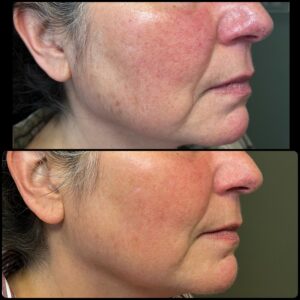
Skincare before and after BBL
Pause tretinoin / retinol and any salicylic or glycolic acid products for 3 days before and 3 days after your treatment.
Avoid direct sun for 14 days after treatment, and wear a broad-spectrum sunscreen with SPF 30 or higher every day, starting the day of your treatment. Treated skin is more prone to sunburn and pigment changes while it heals.
How many BBL sessions will I need?
Most patients need between 1 and 3 sessions to correct specific spots, followed by maintenance 1 to 3 times a year. It’s very patient-specific:
- Darker spots are often easier to treat, because darker pigment absorbs more heat.
- Lighter spots can be more stubborn and may need multiple sessions.
- Many patients are happy with their results after one session. Patients starting with more sun damage usually need a series of three.
Tierney will recommend a plan at your consultation based on your skin and your goals.
When to schedule BBL
Sun exposure is the biggest thing to plan around. If you’ve recently been in the sun or have a tan, it’s not a good time for BBL. The best time is when your skin is paler than usual, like during the rainy season. In Portland, that makes fall and winter a natural time to start.
After treatment, direct sun exposure is the biggest no-no.
BBL pricing and financing
- Single treatment: $499
- Series of 3 within a year: $399 per treatment
Financing is available through Cherry, and payment plans are available.
BBL FAQs
Does BBL hurt?
Most patients rate it about a 2 out of 10. It feels like a warm rubber band gently snapping against the skin, and topical numbing cream keeps most patients comfortable.
What areas can BBL treat?
The face, neck, chest, and hands.
Is there downtime after BBL?
Very little. Expect some rosy redness and darkening of your spots for about a week. There’s no peeling, and you can wear makeup the next day.
Ready to start?
Book a consultation and we’ll start where we always do: What are your goals? What are your concerns?